Dominating the AI-Search Era: How Answer Engine Optimization (AEO) Can Transform Your Business in 2025
In a digital landscape where search results are increasingly curated by AI-powered engines and voice assistants, simply ranking on page one of Google isn’t enough anymore. With Answer Engine Optimization (AEO) you position your brand as the authoritative answer—capturing the spotlight of tools like ChatGPT, Gemini and Perplexity before your competitors even appear in blue links. At AEO Growth Agency, we help businesses stop being just found, and instead become chosen.

Does Domain Authority Matter in AI Search?
Does Domain Authority Matter in AI Search? Exploring AI Search Ranking Factors and Authority Metrics in SEO
By Sean Hyde, Grow with AEO
Search engine optimization (SEO) is changing, and Domain Authority’s role in AI-driven search deserves close scrutiny. This article compares traditional measures like Domain Authority with AI search authority and its new signals. You will get clear insights into how these metrics shape SEO tactics and rankings. Many marketers are adapting to shifting authority dynamics as AI affects search. This guide explains Domain Authority, its place in AI search, and the emerging signals AI-powered engines use.
This article covers the impact of authority metrics on ranking factors, AI’s influence on search performance, and actionable strategies businesses can use to improve authority and rankings.
Key Takeaways
AI search algorithms prioritize content quality and user engagement over traditional Domain Authority metrics for ranking.
E-E-A-T (Experience, Expertise, Authoritativeness, Trustworthiness) is critical for SEO success in AI-driven search environments.
AI search authority evaluates user intent matching, content quality, and trust signals to determine ranking relevance.
Backlink profiles remain relevant but their influence diminishes as AI emphasizes link quality and engagement.
Structured data and internal linking enhance AI search authority by improving content visibility and user navigation.
Local and voice search rankings increasingly depend on AI authority metrics and optimized local SEO strategies.
Regular content updates and semantic SEO practices strengthen entity authority and improve AI search performance.
SEO tools like Google Analytics, SEMrush, and Ahrefs help monitor and optimize AI search authority metrics.
Marketers must adapt to evolving AI algorithms by focusing on high-quality, user-centric content and engagement strategies.
Impact on Search Ranking Factors
AI search algorithms now assess authority across multiple signals, shifting ranking decisions away from single numeric scores. They weigh content quality and user engagement alongside relevance, adopting a holistic view of intent and satisfaction. Domain Authority once served as a predictive indicator, but its weight is falling as AI models become more sophisticated.
Google's own August 2022 helpful content update illustrates this shift directly: Google stated the update was built to better reward content made primarily for people rather than to game rankings, and it later folded that same signal into the core ranking system with the March 2024 core update. Sites built around thin, search-engine-first content lost visibility regardless of backlink volume or Domain Authority score, while sites demonstrating firsthand experience and clear expertise were rewarded — concrete evidence, straight from Google's own announcements, that engagement and content quality now outweigh legacy authority metrics.
Because engagement metrics are rising in importance, content creators should prioritize useful, relevant experiences instead of chasing backlinks or scores. This shift is accelerating, not slowing down: Forrester Research projects that 72% of marketers will increase investment in AI-driven SEO tools by 2026, and a 2025 review of the AI-search literature by MC Pereira — synthesizing findings across 19 separate studies — confirms the same pattern, with intent and engagement signals continuing to displace keyword- and link-based tactics. Businesses must adjust strategies now to meet these AI-driven expectations for meaningful user interactions.
Relevant Authority Metrics in SEO
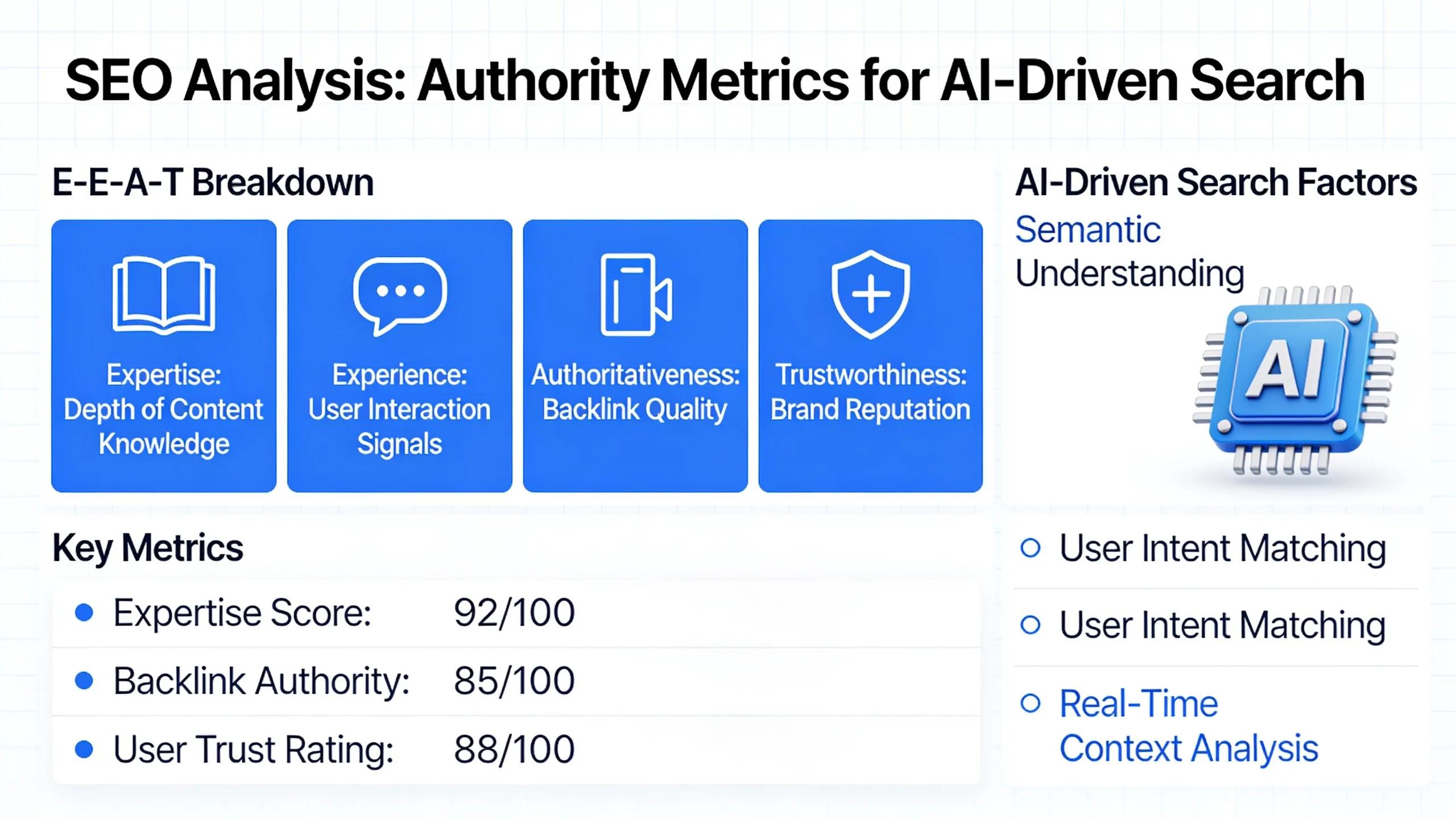
In AI-driven SEO, several authority metrics matter—chief among them E-E-A-T (Experience, Expertise, Authoritativeness, Trustworthiness). Google defines and applies E-E-A-T in its own Search Quality Rater Guidelines, which added "Experience" as a fourth pillar alongside Expertise, Authoritativeness, and Trustworthiness specifically to reward content demonstrating first-hand, real-world familiarity with a topic. AI models increasingly evaluate the depth of expertise and credibility in content, reflecting users' demand for reliable information. SEO teams must understand these parameters to compete in AI-centric search.
One illustrative pattern from the 2022–2024 helpful content and core update cycle: sites publishing personal, experience-based reviews and first-hand case studies tended to hold or gain visibility, while aggregator-style pages with high Domain Authority but no demonstrated experience lost rankings — a direct, documented example of E-E-A-T signals outweighing a legacy authority score.
Below is a comparison of key authority metrics relevant to AI search:
Metric
Definition
Importance
E-E-A-T
Evaluates the credibility and expertise of content
Critical for high rankings in AI algorithms
User Engagement Metrics
Measures how well users interact with content
Indicates content relevance and quality
AI Citation Rate
Reflects the number of times AI models refer to a source
Assesses authority and trustworthiness
The table shows how these metrics shape SEO strategy for AI-enhanced search. Knowing each metric’s role is essential for effective optimization.
Integrating these metrics signals a shift toward prioritizing trust and relevance. Businesses aiming for success must prioritize trustworthy content that meets user expectations as AI evaluations grow more sophisticated.
Overall Influence on Search Performance
Domain Authority’s impact on search performance is becoming less pronounced. AI rewards content that is relevant and engages users, so marketers should adopt a broader view of authority that extends beyond legacy metrics.
User engagement now plays a central role: content quality has overtaken traditional authority scores. Industry forecasting backs up this trajectory heading into 2026 — with a majority of marketers now planning increased spend on AI-driven SEO tools, brands that delay adapting risk losing visibility as AI-curated results become the default entry point for search. Brands must produce material that satisfies both algorithms and audiences to perform well in AI-driven environments.
If you're new to Answer Engine Optimization (AEO), it's helpful to understand the broader shift that's driving these changes. Our guide, What Is Answer Engine Optimization (AEO) and Why Small Businesses Need It Now, explains how AI-powered search engines evaluate content differently from traditional SEO and why businesses should adapt their digital marketing strategies to stay visible in AI search.
What Is Domain Authority and How Does It Differ from AI Search Authority?
Domain Authority (DA) is a scoring system developed by Moz that predicts a website’s ranking potential mainly from its backlink profile. Traditionally it helped marketers estimate likely search performance. AI search authority, by contrast, evaluates content against user intent and qualitative signals rather than relying primarily on backlinks.
This change marks a move to a more nuanced view of authority that values semantic relevance and contextual user behavior over isolated numeric scores. Embracing this shift is vital for businesses that wish to maintain a competitive edge in the evolving SEO landscape.
How is Domain Authority Defined and Measured in SEO?
Domain Authority is scored from 1 to 100 to represent a domain’s relative backlink strength compared with others. It factors in backlink quantity and quality, domain age, and niche relevance to provide an overall sense of ranking potential.
DA remains a useful diagnostic, but AI’s rise highlights its limits. Use Domain Authority as one input—don’t make it the sole objective. A balanced approach that emphasizes user experience and content relevance will deliver stronger results in AI-driven search.
What Unique Authority Signals Does AI-Powered Search Evaluate?
AI-powered search focuses on signals that align content with user intent. Key signals include:
User Intent Matching: AI systems assess whether the content answers the user’s query effectively.
Content Quality Assessment: High-quality content is valued more than mere link-based authority.
Trust Signals: Reputable sources and verification of information enhance the perceived authority of content.
Optimizing for these signals is crucial to improving visibility; recognise and address them to gain higher rankings in AI-driven search.
How Do AI Search Algorithms Use Authority Metrics to Influence Rankings?
AI algorithms use authority metrics to judge content quality and relevance, which reshapes how rankings are determined. Trends indicate traditional metrics are becoming secondary to signals tied to engagement and user satisfaction.
Algorithms favour relevance and engagement over numeric scores like Domain Authority. This shift rewards content that produces strong user interaction, so businesses should align their content with how users engage.
What Role Do Semantic Authority and Entity Relationships Play in AI Search?
Semantic authority and entity relationships are central to AI evaluation. AI uses semantic analysis to map connections between entities, which affects ranking. Content that shows clear relationships gains contextual authority.
Create semantically rich content that links entities clearly so AI can recognise and elevate it in search results.
How Do Backlink Profiles and Domain Authority Impact AI-Powered Ranking Systems?
Backlink profiles still matter, but AI weights link quality, relevance, and engagement more than raw link counts. Google's own March 2024 spam policy update specifically targeted scaled, low-value link and content networks that had previously inflated authority scores without adding real value — sites relying on manufactured backlink volume saw ranking drops even where Domain Authority remained high. As a result, reliance on Domain Authority alone is decreasing.
Marketers should manage backlink health and ensure links contribute to a broader authority ecosystem that engages users meaningfully. For comprehensive approaches in this evolving landscape, explore AEO marketing strategies.
What Is the Real-World Impact of Domain Authority on Voice and Local AI Search?
AI authority metrics affect general, voice, and local search. AI favors concise, authoritative answers—especially in voice search where users expect quick, reliable responses. This shift matters for businesses pursuing local and voice visibility.
Optimizing for local intent can boost traffic when businesses clearly communicate expertise and authority. Integrate local SEO tactics with broader AI optimization practices to capture these gains.
How Does Domain Authority Affect Local Business Rankings in AI Voice Search?
Higher authority correlates with improved visibility in local search results. Businesses with stronger authority metrics are more likely to appear prominently in AI-driven voice search for direct user queries.
Local optimization combined with authority-aware content produces measurable results, since AI rewards content that answers local user needs effectively.
Why Is AI Search Authority More Critical for B2B SaaS in Voice Search Optimization?
For B2B SaaS, AI search authority is especially important because buyers prioritize trust and expertise. Companies must publish well-researched content that directly addresses prospects’ needs to build credibility.
Voice search requires concise, authoritative answers; B2B SaaS providers must optimize content to present clear solutions and meet buyer expectations.
How Can Businesses Improve Their Authority Metrics for Better AI Search Rankings?
To boost authority metrics, adopt strategies that drive engagement and relevance. Key actions businesses can take include:
Focus on Quality Content: Creating in-depth, valuable content that addresses user needs.
Leverage Structured Data: Implementing schema markup to enhance content visibility and clarity.
Engage with User Communities: Building trust through active participation and interaction with relevant online communities.
Prioritizing these steps will help businesses raise the authority metrics needed to compete in an AI-centric search environment.
What Are Best Practices to Strengthen Semantic SEO and Entity Authority?
To build semantic SEO and entity authority, businesses should follow these best practices:
Develop Topical Authority: Focus on becoming an authority in specific subject areas to enhance relevance.
Update Content Regularly: Frequent updates ensure content remains relevant and accurate, fostering trust with users and AI algorithms alike.
Utilize Semantic Markup: Effective use of markup language helps search engines understand content meaning more clearly.
Applying these practices improves a business’s authority and visibility in search results.
Which Tools and Analytics Help Measure and Track AI Search Authority?
Several tools measure and track AI search authority effectively:
Google Analytics: Provides insights into user engagement and content performance.
SEMrush: Analyzes various metrics associated with SEO performance and tracking.
Ahrefs: Specifically useful for backlink analysis and authority metrics assessment.
Using these tools lets businesses monitor authority metrics and refine strategies to meet AI expectations.
How Does Structured Data and Internal Linking Enhance AI Search Authority?
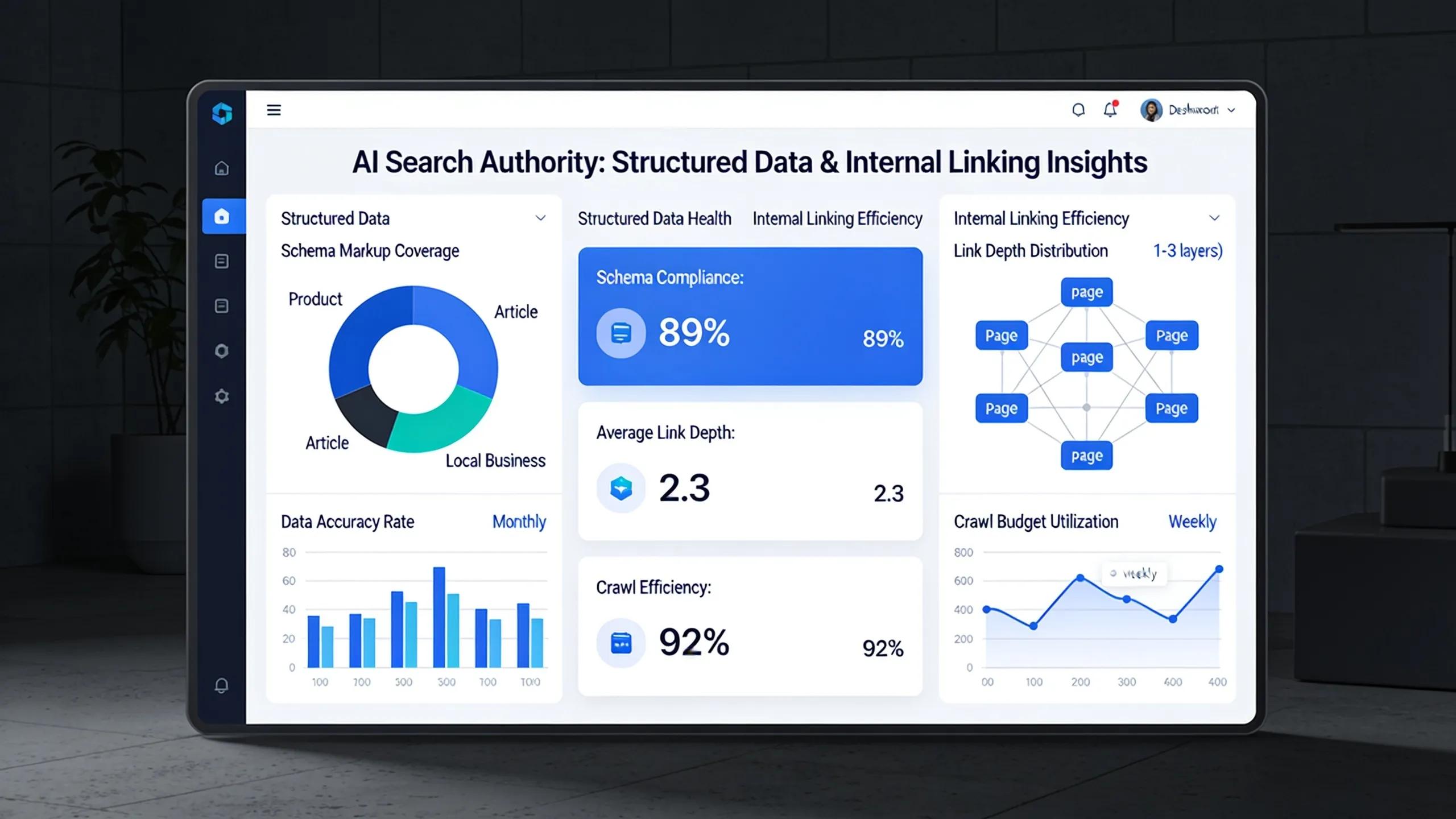
Structured data and thoughtful internal linking boost AI search authority. Schema helps search engines interpret content, improving relevance and visibility, while clear internal links strengthen navigation and retention—signals AI values.
Together these tactics increase clarity and user experience, raising visibility and engagement to support growth.
What Schema.org Markups Are Essential for Highlighting Authority Metrics?
Relevant Schema.org markups help surface authority. Some essential schemas include:
Article Schema: Enhances visibility for news articles and blog content.
FAQ Schema: Helps articulate common questions and answers for improved user engagement.
Local Business Schema: Boosts visibility for local businesses in search results.
Correct use of these markups helps search engines understand content and strengthens overall authority metrics.
How Should Internal Linking Be Strategically Used to Boost AI Search Authority?
Use internal linking strategically with these practices:
Link to High-Authority Pages: Directing users to authoritative content boosts perceived relevance.
Enhance Navigation: Streamlined internal linking helps users find related information effortlessly.
Highlight Related Content: Encouraging exploration of related topics increases engagement and time on site.
These techniques create a cohesive user journey and support long-term authority development.
What Trends and Updates Should Marketers Monitor Regarding Domain Authority and AI Search?
Marketers must track trends that affect Domain Authority and AI search. Key areas to watch include:
Algorithm Changes: Monitoring adjustments in AI algorithms is crucial for adapting strategies.
E-E-A-T Developments: Observing how search engines evolve in their approach to evaluating E-E-A-T metrics offers strategic insights.
User Behavior Shifts: Understanding changes in user search behavior can inform content strategies.
Updating strategies in response to these trends keeps performance aligned with the changing AI search landscape.
Which SEO Industry Reports and Tools Track Changes in AI Search Authority?
Use several industry reports and tools to track AI search authority changes effectively:
Google Alerts: Staying informed about essential news and changes in the SEO landscape.
SEO Newsfeeds: Following credible news sources keeps marketers updated on the latest in SEO trends.
SEMrush: Provides ongoing analysis of performance metrics related to domain authority and changes.
These resources give businesses the insights needed to adapt to shifting authority metrics successfully.
How Can Businesses Adapt to Emerging AI Search Algorithm Updates Affecting Authority?
To adapt to AI algorithm updates, businesses should focus on:
Continuous Content Updates: Regularly refreshing content ensures relevance and accuracy.
Monitoring Signal Changes: Keeping an eye on evolving authority signals allows for timely adjustments to strategies.
Emphasizing Quality Over Quantity: Focusing efforts on producing high-quality, engaging content fosters better relationships with AI algorithms.
Proactive adaptation positions businesses to perform well as AI search evolves.
Optimizing for voice search marketing is increasingly important.
Frequently Asked Questions
1. How do AI search engines evaluate the quality of content?
AI search engines judge content quality using metrics that favor engagement and user satisfaction over legacy authority scores. They measure how well content meets intent by assessing relevance, readability, and depth. Signals such as click-through rate, time on page, and social shares inform these assessments. This approach encourages creators to deliver valuable, well-structured content rather than only optimizing for keywords or backlinks.
2. What strategies can improve user engagement for AI-driven SEO?
Improve engagement by publishing informative, interactive content that answers user needs. Optimize page load speed and mobile experience. Invite comments and social sharing to build community. Use visuals—infographics and videos—to retain attention and encourage deeper interaction with your site.
3. What role does trustworthiness play in AI search rankings?
Trustworthiness heavily influences AI rankings because algorithms favor reputable, verifiable sources. Build authority with accurate, well-researched content and supporting signals such as authoritative backlinks and positive reviews. Consistent, factual content strengthens the trust signals AI recognizes.
4. How does local SEO strategy affect AI search authority?
Local SEO affects AI authority by improving visibility for geographically relevant queries. Claim and optimize your Google My Business listing, maintain consistent citations across local directories, and encourage customer reviews. These actions strengthen local signals that help AI surface businesses serving community needs.
5. How can businesses keep up with changes in AI search algorithms?
Keep up by monitoring SEO news sources, attending industry webinars, and participating in forums. Use Google Analytics to track shifts in user behavior and site performance. Regularly review and update SEO strategies to remain aligned with AI search trends.
6. What are the most important SEO tools for measuring authority in AI search?
Key tools include Google Analytics for engagement insights, SEMrush for performance analysis, and Ahrefs for backlink research. Moz can help track Domain Authority over time, offering a useful benchmark for SEO effectiveness.
7. Why are regular content updates essential for SEO in AI search?
Regular updates keep information current and relevant, and AI tends to favor fresh content. Updates signal that a site maintains accurate, timely content. Consistent refreshes boost rankings and user trust, increasing the likelihood of repeat visits.

Don't Get Left Behind
What happens if you ignore this shift in marketing? You'll continue to fight for scraps in an overcrowded SEO landscape. You'll miss out on the highest-quality customers. And you'll watch as your competitors who embrace AEO leave you behind.
Ready to Grow Your Business with AEO?
Stop competing and start answering. Get your free AEO Action Plan today and discover how we can help you attract more high-value customers.
Stop competing and start answering. Get your free AEO Action Plan today and discover how we can help you attract more high-value customers.