Dominating the AI-Search Era: How Answer Engine Optimization (AEO) Can Transform Your Business in 2025
In a digital landscape where search results are increasingly curated by AI-powered engines and voice assistants, simply ranking on page one of Google isn’t enough anymore. With Answer Engine Optimization (AEO) you position your brand as the authoritative answer—capturing the spotlight of tools like ChatGPT, Gemini and Perplexity before your competitors even appear in blue links. At AEO Growth Agency, we help businesses stop being just found, and instead become chosen.
How AI Trust Signals Build Business Credibility
How AI Trust Signals Build Business Credibility
By Grow with AEO Editorial Team · Updated 2026-08-26
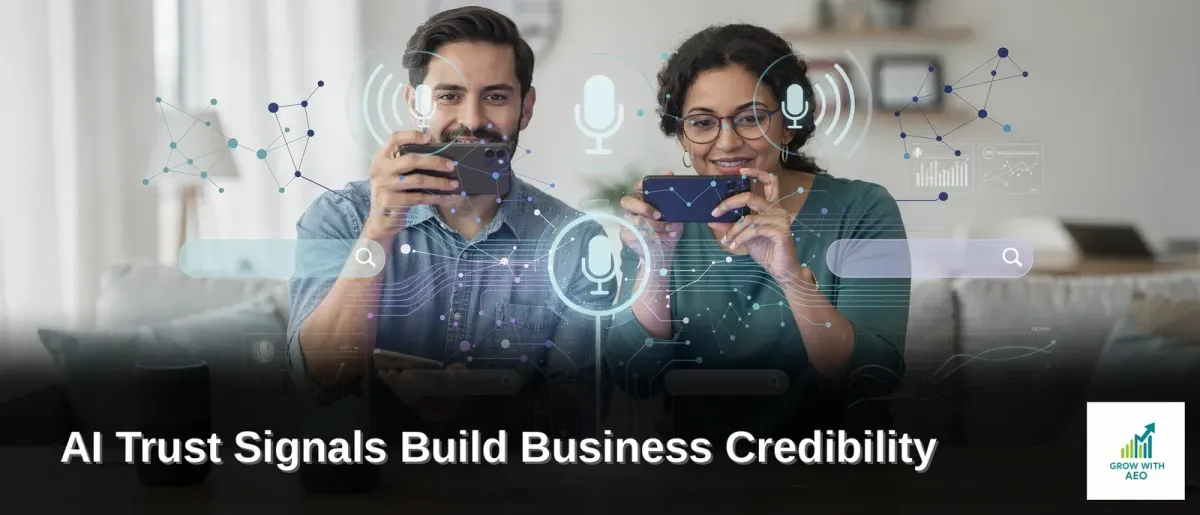
Trustworthiness to AI search engines depends on consistent, verifiable information across the web. Reviews, business listings, third-party citations, and structured data on the website must all align. Tools like ChatGPT, Gemini, and Perplexity cross-check these sources before recommending a brand, so clarity and consistency—not just website content—determine whether a business becomes the cited answer.
Key Takeaways
AI systems evaluate trustworthiness through reviews, listings, citations, and third-party mentions beyond your website.
Consistent information across all business sources strengthens your credibility with AI search engines.
AI-driven website traffic converts 40-300% better than traditional search traffic for high-value customers.
Website visitors from AI answer engines bounce 40% less than visitors from traditional search.
Why Don't AI Engines Trust Your Business Yet?
Most businesses fail this test before they even know it exists. AI-driven search engines evaluate intent and context instead of matching exact keyword phrases, which means a website stuffed with product terms but thin on real answers gets passed over. Search platforms now favor sites that clearly and reliably answer actual customer questions. A business that repeats slogans instead of solving problems simply doesn't register as a credible source.
The stakes are larger than they appear. Voice search has become a daily habit for 41% of adults. The average AI user runs 34 queries per day. Every one of those queries is a moment where an unclear or inconsistent business gets skipped in favor of a competitor with stronger AI trust signals.
What counts as an AI trust signal?
Trust signals are the pieces of public information AI systems check before recommending a business: clear service descriptions, consistent details across the web, and language that answers real questions instead of promoting vague claims. Businesses now face a credibility test, and public information must stay clear, current, and verifiable beyond the company's own website.
Why isn't a good website enough anymore?
A polished homepage no longer guarantees visibility in AI-generated answers. AI systems cross-check a business against outside signals before trusting its own self-description. Gaps between what a website claims and what other sources confirm create hesitation, and hesitant systems recommend the competitor instead.
Three common trust gaps explain most of the visibility problem:
Vague or promotional copy that never directly answers a customer question
Inconsistent business details across directories, listings, and profiles
Content structured for keyword matching instead of conversational intent
What Signals Do AI Systems Actually Weigh?
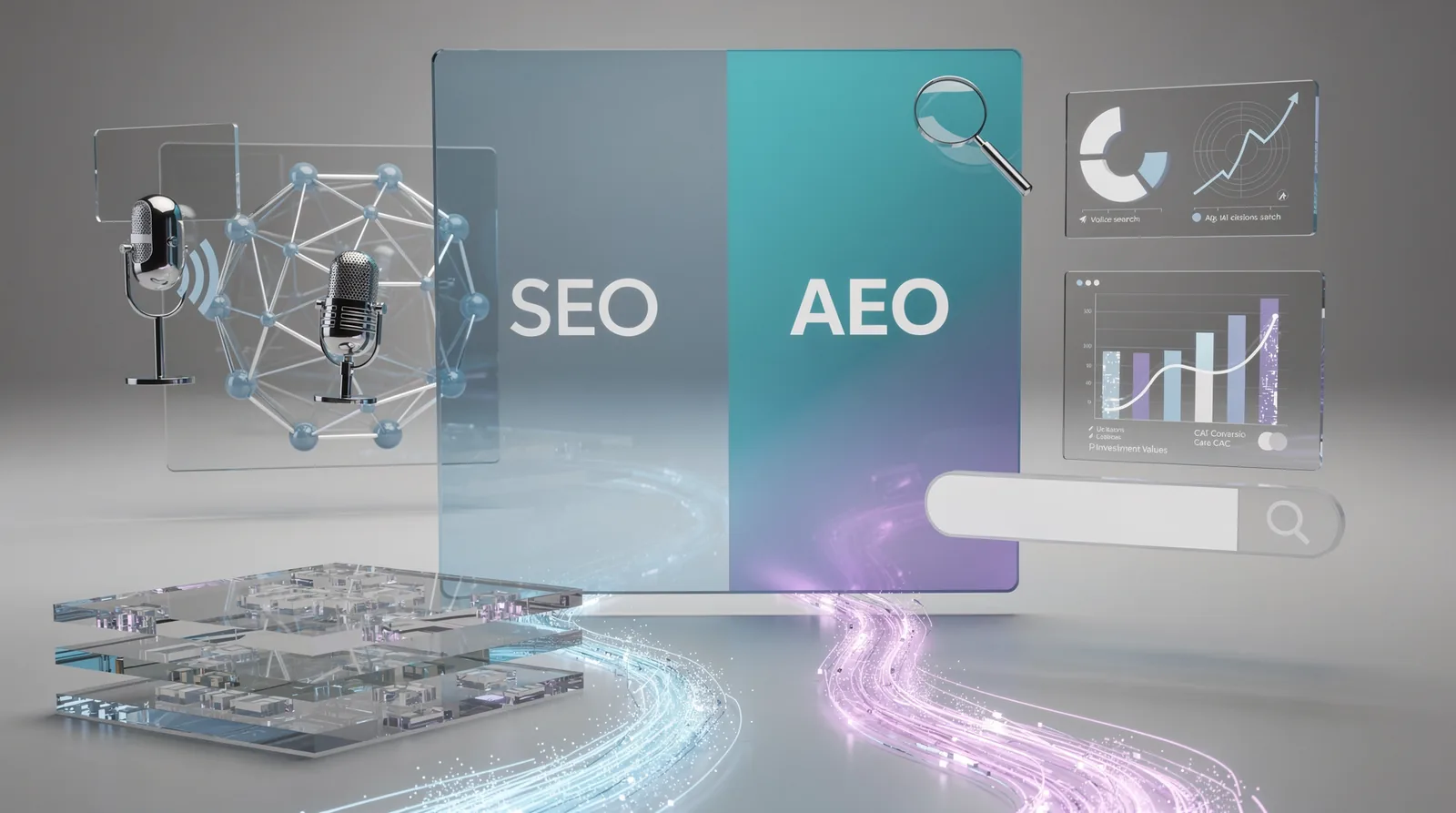
AI platforms recommend businesses by reading specific signals, not by chance selection. Generative engines scan the open web for evidence a company is real, active, and consistent before citing it as an answer. Brands that ignore this evaluation process lose visibility to competitors whose information is easier to verify.
Three factors carry the most weight. First, clarity: does the website explain, in plain terms, what the business actually sells? Second, consistency: does the business name, address, and contact information match across every platform where it appears? Third, parseability: can automated systems extract that information without wading through cluttered design or vague copy?
What makes a business trustworthy to AI systems?
Trust forms when multiple signals point in the same direction at once. A business earns that trust through clear messaging, matching contact details across the web, and mentions from sites the model already treats as credible. Structure matters too — content organized in a scannable, logical format gets parsed and cited more reliably than dense, unstructured pages.
Can a website alone build AI trust signals?
A single well-written page rarely carries enough weight on its own. AI trust signals accumulate across a network of sources, not a single homepage.
Signals worth auditing include:
Messaging clarity — does the homepage state the offering in one sentence?
Data consistency — same name, address, phone number everywhere?
Third-party validation — mentions on sites the model already trusts?
Content structure — headers, lists, and answers formatted for extraction?
Answer Engine Optimization exists to align these factors deliberately. Structuring content so ChatGPT, Gemini, and Perplexity can understand, trust, and cite it turns scattered signals into a coherent, citable profile.
Can Your Website Alone Build AI Trust?
No, a company site cannot build full credibility by itself. AI-powered search engines never judge a brand's reliability from owned web pages alone. Generative systems cross-check outside evidence before deciding what to cite. A polished homepage carries far less weight than it once did. A brand's own claims about itself simply do not settle the question of trust for an algorithm scanning the open web.
That shift changes what business owners and CMOs need to prioritize. Reviews, directory listings, business profiles, and citations from other websites now confirm whether a company is a dependable choice. These external signals function as corroborating witnesses, and generative engines weigh them alongside — sometimes above — a company's own copy.
Why doesn't a great website guarantee AI visibility anymore?
A strong site can no longer carry the full weight of getting discovered. Design quality, page speed, and polished copy matter less than whether outside sources back up what the site claims. Discovery now depends on a network of confirming evidence spread across the internet, not a single domain.
What actually earns AI trust signals for a brand?
Clear, reliable answers to real customer questions earn more citations than pages stuffed with repeated marketing phrases. AI systems favor content that resolves genuine user intent over material optimized for keyword repetition. Building durable AI trust signals means combining that on-site clarity with a consistent footprint of third-party mentions.
Marketers should treat their website as one voice in a larger conversation:
Company pages that answer specific customer questions directly
Third-party reviews and business directory listings
Independent citations and mentions across other credible sites
None of these elements works alone; together, they form the credibility profile AI systems actually trust.

How Does Trust Translate Into Traffic and Conversions?
Trust converts at a measurably higher rate than traditional search traffic. Businesses cited by answer engines see conversion rates jump 40% to 300% higher than visitors arriving through conventional website search. That gap exists because AI-recommended traffic arrives pre-qualified: the AI system already vetted the business before sending the visitor, so skepticism drops and purchase intent rises.
Bounce rates tell a similar story. Visitors who land on a site after an AI system recommends it stay longer. Leave 40% less often than those coming from standard search results. Fewer bounces mean more time to build a case, answer objections, and move a prospect toward a decision.
Why Do Credibility Gaps Cost Businesses Customers?
Outdated listings, thin reviews, and inconsistent business details push otherwise qualified companies out of consideration. When information conflicts across the web, AI systems favor the competitor with cleaner, more current signals. Even if the overlooked business offers a better product or service. AI trust signals function as the gatekeeper between visibility and invisibility in this new search environment.
The stakes keep climbing. Gartner projected that AI-driven algorithms would shape more than a notable share of online searches by 2025, a shift that leaves little room for businesses treating trust signals as optional. Three outcomes separate the businesses winning this shift from those losing ground:
Higher-converting traffic from AI-driven discovery channels
Longer visitor engagement and lower bounce rates
Reduced risk of being overlooked in favor of better-documented competitors
Ignoring these signals doesn't just slow growth — it hands qualified customers to competitors with cleaner data.
What Should You Do Next to Earn AI Trust?
Specialized guidance moves brands from guesswork to a structured plan for earning AI trust signals. Businesses lose visibility every day their site, listings, and public profiles send mixed or unclear messages to AI systems. The next move matters: partnering with a team that understands exactly what these platforms evaluate before recommending a brand.
Grow with AEO helps businesses get found by high-value customers across AI and voice search. That focus comes from working exclusively as an AEO agency, rather than treating answer-engine visibility as a side project bolted onto traditional SEO. Concentrated attention like this means resources go directly toward the signals AI systems actually weigh, not scattered across tactics built for a different era of search.
Does certified expertise actually matter for AI visibility work?
Credentials signal that the guidance behind a strategy holds up to scrutiny. Sean Hyde holds a Qualified.org Certified AEO Specialist credential, giving clients a documented basis for trusting the strategy driving their AI-search plan.
What does earning AI trust actually achieve for a brand?
Positioning matters more than mere presence. A brand recognized as the authoritative answer gets captured by tools like ChatGPT, Gemini, and Perplexity. Often before competitors even register in traditional blue-link results.
Business owners weighing next steps should consider:
Auditing current site clarity and public listing consistency
Bringing in certified AEO expertise rather than generalist SEO tactics
Choosing an agency built specifically around answer-engine strategy
Prioritizing authoritative positioning over simple keyword presence
Each step builds toward one outcome: becoming the answer AI systems choose to recommend.
FAQ
What signals do AI systems check before trusting a business?
AI systems weigh clarity, consistency, and parseability: clear service descriptions, matching business details across every platform, and structured information automated systems extract without cluttered design or vague copy.
Why does a well-designed website fail to earn AI trust?
AI systems cross-check a website against outside sources like reviews, listings, and citations. Gaps between website claims and other confirming sources create hesitation, causing AI engines to recommend competitors instead.
What common mistakes create trust gaps with AI search engines?
Vague promotional copy that never answers real questions, inconsistent business details across directories and profiles, and content structured for keyword matching instead of conversational intent all create trust gaps.
Conclusion
In closing, trustworthiness to AI search engines stems from the same foundation that builds human trust: authoritative content, transparent sourcing, and genuine expertise. As AI systems become the primary discovery path for high-value customers, businesses that prioritize accuracy, credibility, and user intent position themselves as the answers these systems surface. The brands that invest in AEO strategies today establish themselves as the trusted voices tomorrow's AI-driven searches will recommend.

Don't Get Left Behind
What happens if you ignore this shift in marketing? You'll continue to fight for scraps in an overcrowded SEO landscape. You'll miss out on the highest-quality customers. And you'll watch as your competitors who embrace AEO leave you behind.
Ready to Grow Your Business with AEO?
Stop competing and start answering. Get your free AEO Action Plan today and discover how we can help you attract more high-value customers.
Stop competing and start answering. Get your free AEO Action Plan today and discover how we can help you attract more high-value customers.