
Common AI Visibility Mistakes (And How to Fix Them)
AI Visibility Mistakes That Hurt Your Online Presence in 2025 — and How to Fix Them
AI visibility describes how often and how accurately AI systems—like Google AI Overviews, Perplexity, and large language models—pull, cite, and surface your content as answers. When these systems can reliably read facts, entity signals, and structured answer blocks from your pages, your brand gets higher-converting, lower-bounce traffic that AI platforms favor. This guide walks through the most common visibility mistakes teams make, why those errors drop citation and discoverability, and the exact remediation patterns that rebuild AI trust. You’ll get clear steps to fix structured data, optimize for voice and conversational queries, strengthen entity signals, make content answerable for snippets and overviews, tailor content per platform, and ensure technical AI indexability. Keep reading for practical checklists, EAV-style tables, and platform-specific tactics tuned for AI behavior in 2025.
Structured Data Errors That Most Affect AI Visibility
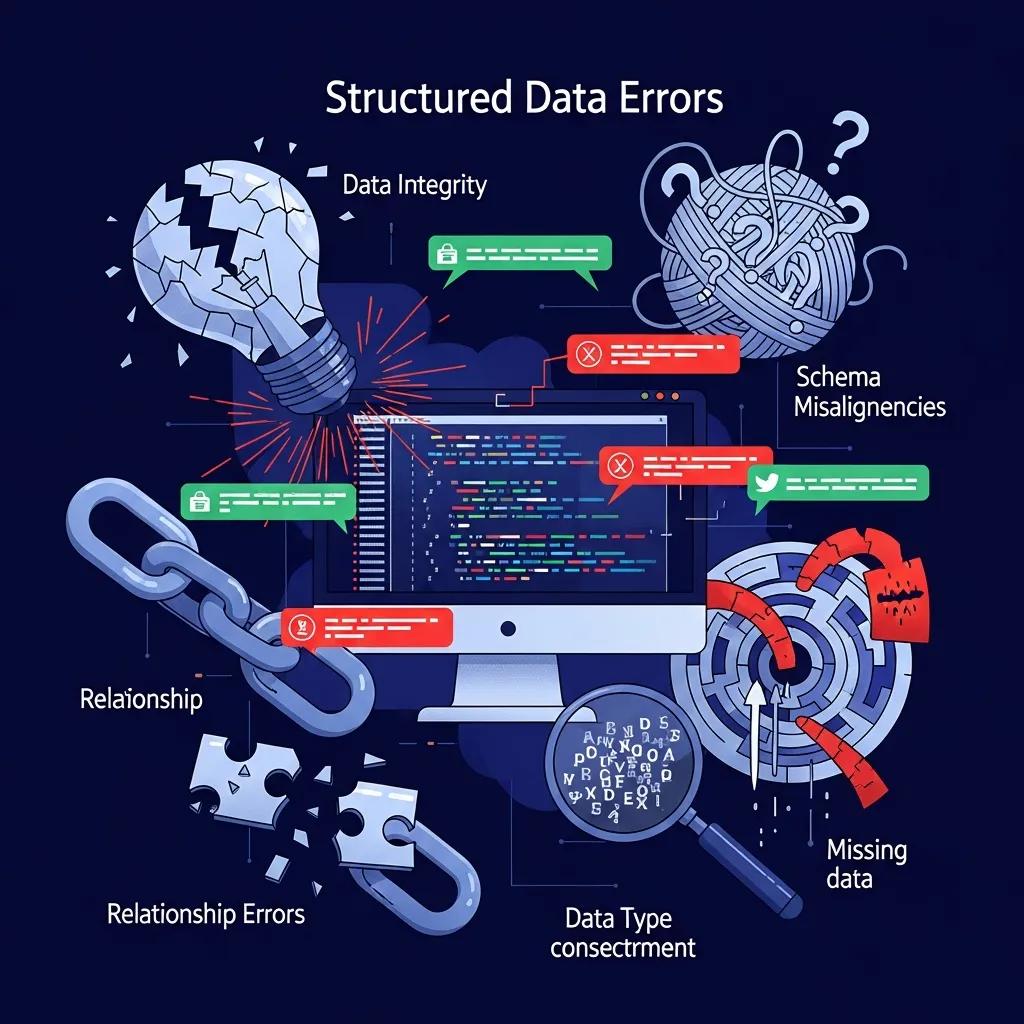
Structured data is machine-readable markup that helps AI extract facts and map entities. When markup is missing, malformed, or misaligned with the visible content, AI systems either ignore a page or pull incomplete, misleading facts—reducing your chance of being cited. In practice, AI pipelines look for consistent JSON-LD fragments and appropriate schema types that match the page; errors break that mapping and lower citation probability. Fixing these problems improves your odds of appearing in concise answer blocks and overview citations. Below we list frequent issues, tools to find them, and pragmatic first steps to repair markup so AI can read your pages reliably.
Typical schema problems that reduce AI extraction and citation include:
Required properties missing for schema types, preventing AI from recognizing key facts.
Invalid or malformed JSON-LD that causes parsers to skip the markup entirely.
Schema types that don’t match the visible content, creating verification gaps.
Overly generic or incorrect types that blur entity relationships and hierarchy.
These issues are detectable with validators and fixable by aligning on-page text with JSON-LD and re-running schema checks; next we look at extraction failure modes and practical validation steps.
How Missing or Incorrect Schema Markup Changes AI Search Outcomes
When schema is missing or wrong, AI extractors either miss essential facts or pull incorrect attributes—both reduce the chance your site is cited. If required properties are absent, AI can’t build the minimal fact set it needs to attribute information, so your page is often omitted from snippets, HowTo citations, and overview lists. For example, an FAQPage without mainEntity or acceptedAnswer fields commonly fails to appear as a concise Q&A unit in AI outputs. Detect these failures by parsing server logs and running live validators to see which pages return no structured results and prioritize fixes accordingly.
Remediation steps include repairing JSON-LD syntax errors, mapping visible headings to schema properties, and revalidating until parsers report success. Serve markup server-side whenever possible and avoid injecting essential schema only via client-side scripts without fallbacks. Fixing extraction failures restores your eligibility for direct-answer placements and raises AI citation probability — which leads into implementation and validation best practices.
Best Practices to Implement and Validate Structured Data Correctly
Where possible, render JSON-LD server-side, pick the most specific schema types (FAQPage, HowTo, Article, Service), and ensure every marked property appears in the visible copy so AI can verify claims. Validate both syntax and semantic alignment with tools that report parser warnings, and adopt an audit cadence—weekly for pages that change often, monthly for stable content. Keep schema versions current and only use microdata fallbacks when JSON-LD isn’t feasible.
A practical workflow: add JSON-LD alongside visible content, run a schema validator, fix flagged errors, then verify real-world extraction by sampling AI queries that should cite your page. Automate monitoring to reduce regression risk and maintain consistent AI citations. For teams that need hands-on help, Grow with AEO offers AEO audits and schema implementation to restore and validate structured data for better AI visibility.
Schema TypeCommon ErrorPractical Fix / ToolsFAQPagemissing mainEntity / acceptedAnswer fieldsAdd mainEntity objects that mirror visible Q&A; validate with Schema Markup ValidatorHowTosteps unstructured or missing itemListElementUse step objects with required properties; test with Rich Results TestArticle / NewsArticlemissing author or datePublished fieldsPopulate author and date metadata in JSON-LD; monitor with automated schema auditsServicegeneric type or mismatch with page copyUse Service with offeredService details and align the page; revalidate after changes
This EAV-style table lists common schema types, typical attribute issues, and concrete tools for rapid triage and repair.
FAQPage Schema Increased ChatGPT Citation Rates
Summary: Sites that implemented FAQPage schema were cited more often by ChatGPT-style models. Adding clear Schema.org FAQ metadata—designed to answer common queries—helped generative models surface and attribute content. This trend has direct implications for Generative Engine Optimization (GEO) and how organizations plan for discoverability in 2025.
Why Ignoring Voice Search Optimization Is a Critical AI Visibility Mistake

Voice search matters because spoken queries are short, conversational, and often expect immediate local answers. Ignoring voice signals means missing a sizable share of AI-driven referrals. Voice assistants and AI overviews prioritize concise, direct answers that match conversational intent—so optimizing for voice increases the chance your content appears in assistant responses, read-aloud answers, and conversational summaries. Below are the UX and content patterns that influence voice outcomes and a short corrective framework to prioritize.
Important voice signals include fast mobile performance, short answer blocks near the top of the page, and explicit local intent for “near me” queries. Voice systems also favor content that can be read aloud succinctly, so aim for answerable content at H2/H3 granularity. Addressing these areas increases the odds an AI assistant will select your content for spoken responses and overview citations.
How Conversational Queries and Mobile UX Affect Voice Rankings
Voice queries use natural language and implied context—think “best coffee near me” versus typed “coffee shops [city].” Voice assistants combine intent inference with local signals, so pages that show concise local facts and load quickly on mobile are more likely to be chosen. Mobile-first indexing and Core Web Vitals still influence voice eligibility, so page speed and renderability are critical.
To optimize: place short answer snippets at the top, meet mobile speed thresholds, and expose key facts with schema so AI can verify and read answers aloud. These changes help AI map conversational queries to citable content and improve local and voice performance.
Strategies to Improve Local and Conversational Voice Visibility
Focus on concise answer units, consistent local citations, and speakable schema where it applies. Local pages should show NAP (name, address, phone) and short answers in the first content blocks. Use natural phrasing in Q&A blocks to mirror how people speak and build landing content for common spoken queries.
Short Answer Blocks: Place 1–2 sentence answers under H2/H3 headers for voice assistants.
Local Signal Hygiene: Keep NAP consistent across canonical pages and authoritative directories.
Speakable & FAQ Schema: Add speakable markup and FAQ schema to improve read-aloud eligibility.
These prioritized tactics lift your odds of voice citations and conversational inclusion. For teams that want a managed approach, Grow with AEO provides Voice Search Marketing services and a five-phase process to unify conversational content and local signals.
Frequently Asked Questions
How does content structure affect AI visibility?Clear structure helps AI find and extract facts. Headings, short answer blocks, and proper schema make it easier for AI to identify the right passage for snippets and overviews. In short: well-organized content is more citable.How do I measure if my AI visibility work is working?Track citation rates, organic referrals from AI-driven sources, and appearances in AI-generated snippets. Use tools like Google Search Console for impressions and clicks, run periodic schema audits, and A/B test content formats to see what gets cited more.What happens if I ignore local search optimizations?Neglecting local optimization reduces your chances of showing up for location-based or “near me” queries. To avoid that, keep NAP consistent, use local schema, and create pages tailored to nearby search intent.Does user engagement influence AI citations?Yes. Signals like time on page, low bounce, and social shares indicate value to both humans and AI. High engagement supports credibility and increases the chance AI systems will surface your content.Which tools are best for monitoring AI visibility and structured data?Key tools include Google Search Console, Schema Markup Validator, and Rich Results Test. SEO platforms (SEMrush, Ahrefs) help you track traffic and keywords, while custom monitoring can detect changes in AI citation behavior.How do I keep content relevant as AI algorithms evolve?Update content regularly, audit schema, and monitor user behavior. Refresh data, add current citations, and iterate based on query tests so your content stays aligned with changing AI signals.
How Inconsistent Entity Signals Weaken AI Trust and Citations
Entity authority is a clear, verifiable representation of your brand across the web. When entity signals conflict—like mismatched NAP entries or differing descriptions—knowledge graph construction becomes noisy and AI trust drops. AI systems build entity maps from repeated, consistent facts across authoritative sources; when signals disagree, the entity’s confidence score falls and citation likelihood declines. Creating canonical entity pages, consistent citations, and authoritative mentions restores trust and lifts your citation rate.
To build entity authority, reconcile citation records, claim and optimize major platform profiles, and publish canonical About pages that state entity attributes clearly. The EAV-style table below helps prioritize monitoring and remediation.
EntityAttribute (Consistency Issue)Action / MonitoringBusinessNAP inconsistencies across directoriesAudit top citations, update records, and set a canonical NAP on the siteAuthormissing structured author profileAdd author schema and bios that match published contentBrand Pageconflicting or sparse descriptionsCreate a canonical About page and secure authoritative mentions
This quick EAV table outlines entities, inconsistent attributes, and concrete actions to rebuild coherent signals AI systems can trust.
Why Consistent NAP Matters for Local Entity Authority
Consistent NAP data helps automated entity resolution systems link the same business across directories, maps, and knowledge graphs. Discrepancies fragment the entity graph and lower citation probability. AI systems aggregate signals from many sources and prefer entities that present repeated, matching facts. Use an audit checklist to spot high-impact mismatches like phone format differences or alternate business names on major platforms.
Audit steps: export citations, normalize formats, correct the most authoritative sources first, and schedule periodic checks. Reconciliation improves knowledge graph linkage and downstream AI trust, preparing you to pursue authoritative mentions that further boost citation likelihood.
How Knowledge Graph Presence and Authoritative Citations Help
A presence in knowledge graphs gives AI a deterministic entity to reference, and citations from high-authority sources (press, industry sites, databases) increase an entity’s trust score. These relationships create edges in the knowledge graph that improve context and raise the chance your content is chosen as a source for AI summaries.
Tactics include claiming profiles, publishing structured About pages, and pitching targeted mentions to reputable publications. Over time, these authoritative citations expand your contextual footprint and directly improve AI citation rates for relevant queries.
Signs of Poor Content Answerability That Block AI Success
Content answerability means pages present short, verifiable answers that AI can extract and attribute. Poor answerability shows up as long-winded intros, buried facts, or missing citations. AI overviews and snippets prefer short, top-of-page answers tied to reputable sources; when answers are hidden or vague, AI systems skip your content. Use the diagnostic checklist below to find problem pages and prioritize fixes.
Overly long opening paragraphs: Move the main answer to the top.
No 1–3 sentence answer blocks: Add short, focused answers under H2/H3 headings.
Insufficient citations: Add reputable external references and mark them up.
Use this checklist to triage pages, then apply direct-answer templates AI can extract reliably.
Why Missing Short Answers Keeps You Out of Snippets and Overviews
AI systems prefer short answer units—typically one to three sentences—so pages without those units are unlikely to be selected for snippets, even if the rest of the content is high quality. Algorithms score passages for clarity, brevity, and verifiability, and verbose or ambiguous text gets discarded. Reformat pages to include a prominent short answer near the top to become snippet-eligible.
A simple template: present the concise answer in the first 1–3 sentences under a clear H2, follow with a short expansion and a cited source, and add FAQ or Article schema to signal answer structure. These edits materially increase your chance of appearing in AI-generated overviews.
Why Demonstrating E‑E‑A‑T Matters for AI Credibility
E‑E‑A‑T (Experience, Expertise, Authoritativeness, Trustworthiness) bundles signals AI uses to judge credibility. Show E‑E‑A‑T with author bios, case studies, and structured credentials to raise the likelihood of AI citation. AI pipelines weigh provenance and source reliability when selecting passages, so verifiable credentials and author markup give the evidence AI needs.
Implement author schema, a site-level About page, inline citations to reputable sources, and surface case studies and credentials near answer blocks. That mix signals both human and algorithmic evaluators that the content is authoritative and worth citing.
Platform-Specific Gaps That Reduce Cross‑Platform Visibility
AI platforms use different citation mechanics and ranking signals, so a single optimization won’t perform best everywhere. Google AI Overviews favor concise facts, structured data, and strong citations; Perplexity looks for clear, citable passages and accessible links; ChatGPT-style models reflect training data and context where clarity and reproducibility matter. A platform-aware strategy adjusts structure, metadata, and monitoring to each system’s needs to maximize cross-platform citation rates. The table below summarizes platform-specific best practices.
PlatformPlatform RequirementBest PracticeGoogle AI Overviewsconcise facts + structured data + authoritative citationsUse FAQ/Article schema, short answer blocks, and cite reputable sourcesPerplexity AIclear, citable passages + accessible source linksProduce concise factual paragraphs and ensure crawlability for source indexingChatGPT-style LLMshigh-quality training signals and reproducible contentMaintain authoritative, well-cited content and enable accessible content sampling
This comparison shows why tailored optimizations are necessary to earn citations across different AI systems.
Best Practices to Win Inclusion in Google AI Overviews
To get into Google AI Overviews, provide explicit short answer units, add Article and FAQ schema, and place high-authority citations next to those answers. Google’s systems favor passages that can be corroborated by reputable references and machine-readable markup. Structure content with concise facts at the top and back them with structured data to increase selection probability.
Checklist: short answer under H2, JSON-LD Article/FAQ markup, inline citations to reputable sources, and regular checks to see if your pages appear in overviews. Test queries and iterate based on real-world results.
How to Improve Visibility on Perplexity and ChatGPT-Style Outputs
Perplexity and ChatGPT-style systems evaluate content quality and source accessibility differently. Improve visibility by producing easily citable facts, keeping pages crawlable, and increasing authoritative references that crawlers or APIs can ingest. Perplexity surfaces sources when it can access and evaluate them; ChatGPT-style mentions correlate with high-quality, reproducible content in training and sampling pipelines.
Run experiments—A/B test concise passage formats, measure citation frequency in Perplexity, and track downstream mentions in LLM outputs. Avoid relying on heavy client-side rendering for key content and make metadata accessible so these platforms can sample and cite your pages.
Large-Scale Crawling and AI: Implications for Source Discovery
This study reviews modern web crawling infrastructure and the challenges of extracting content behind complex interfaces. It explores distributed search systems and how large language models change information retrieval, arguing for more robust crawlers that can convert diverse web content into structured formats for AI consumption.
How Technical AI Indexing Shapes Your Brand’s Search Presence
Technical AI indexing includes crawlability, JavaScript rendering, and metadata access. If AI crawlers can’t fetch or render your content reliably, your structured data, answer blocks, and authority signals become invisible. AI pipelines need raw content plus machine-readable markup to form citations; failures at fetch or render stages make pages ineligible for selection. Fixing these technical gaps is the foundation of any visibility program.
Common bottlenecks include blocked resources, client-side-only markup, and slow render times that lead to incomplete indexing. Diagnose problems with render tests, server logs, and fetch-as tools to confirm what the crawler actually sees. Typical remediations are server-side rendering, prerendering for dynamic pages, and ensuring structured data appears in the initial HTML.
Common Crawlability and JavaScript Rendering Problems for AI
Typical issues include markup injected only after complex client interactions, blocked API calls for essential content, and robots or server rules that prevent access to needed assets. These cause partial or empty snapshots that AI systems use to decide if content is citable. Detect problems with render testing, log analysis, and simulated crawls that compare expected versus actual snapshots.
Fixes: move critical structured data server-side, unblock required resources, and use prerendering for heavy single-page apps. Regularly test representative pages to ensure the crawler’s snapshot includes the same answerable content users see. Solving renderability issues prepares pages to be selected by AI systems and supports downstream citation activity.
How to Make Your Site AI-Ready with Technical Fixes
Prioritize server-side rendering or reliable prerender paths for pages that contain structured data and short answer blocks. Ensure robots and security settings allow crawlers to access required assets, and optimize performance so snapshots are complete during crawling. Implement automated monitors that check rendered HTML for key JSON-LD fragments and short answer blocks. Maintain an incident process for technical regressions and tie those alerts into your content audit so AI visibility losses trigger rapid fixes.
Grow with AEO offers platform-specific citation monitoring—tracking Google AI Overviews, Perplexity, and ChatGPT sampling—to detect when technical regressions or content changes reduce citation rates. For organizations that want structured remediation, Grow with AEO follows a systematic five-phase process combining audits, schema implementation, voice search optimization, entity mapping, and citation monitoring to produce measurable gains. To evaluate your AI visibility baseline and remediate high-impact errors, Grow with AEO provides AEO audits and tailored remediation planning; contact details are available through their site.
Audit: Find structured data, entity, content, and technical gaps.
Implement: Apply schema, answer blocks, and technical fixes in order of impact.
Validate: Re-run render and schema validators to confirm fixes.
Monitor: Track AI citation rates and platform sampling to spot regressions.
Iterate: Use measurable outcomes to refine content and technical tactics.
These phased, measurable actions restore and grow AI-driven visibility while keeping accountability for results.