
How to Audit a Page for AEO Readiness
How to Audit a Page for AEO Readiness
Search is no longer limited to a list of blue links. People now ask complete questions and expect direct answers from search engines, AI assistants, voice interfaces, and other answer-driven platforms.
That shift has created a new challenge for businesses: a page can rank in traditional search results and still be difficult for an AI system to understand, retrieve, summarize, or cite.
An AEO audit helps identify those gaps. Answer Engine Optimization (AEO) is the practice of structuring and strengthening content so search engines, AI assistants, and answer systems can understand it, retrieve relevant information from it, and present it in response to user questions.
Auditing a page for AEO readiness means evaluating more than keywords. You need to determine whether the page clearly satisfies search intent, answers important questions, defines its entities, supports its claims, uses an understandable structure, connects to related content, and gives answer systems information they can confidently interpret. This guide walks through a practical process for auditing a page for AEO readiness and prioritizing the improvements that matter most.
What Does AEO Readiness Mean?
A page is AEO-ready when its purpose, subject, answers, and supporting information are clear enough for both people and machines to understand.
A strong AEO page should make it easy to determine:
What is this page about?
What primary question or need does it address?
Who or what are the important entities on the page?
Which statements directly answer the user's questions?
What evidence supports the information?
How does this page relate to other content on the website?
Is the information current and trustworthy?
Can important passages be understood when extracted from the page?
AEO readiness is not achieved by adding an FAQ section or installing schema markup alone. It comes from the combined quality of the page's content, structure, technical signals, entity relationships, evidence, and overall usefulness.
Why Should You Audit a Page for AEO Readiness?
Traditional SEO audits often focus on factors such as keywords, metadata, indexability, backlinks, page speed, and organic rankings.
Those factors remain important. An AEO audit adds another layer of questions.
For example:
Does the page provide a direct answer to the primary query?
Are important answers easy to extract and understand?
Does the page cover the follow-up questions a user is likely to ask?
Are important entities clearly identified?
Are claims supported by evidence or expertise?
Does the page connect logically to related topics?
Can an answer engine determine which information is most important?
Is the page appearing or being cited for relevant AI prompts?
A page may be technically optimized and still perform poorly in answer-driven search environments. The goal of an AEO audit is to find the difference between content that merely exists in an index and content that is clear, useful, retrievable, and citation-worthy.
The 10-Step AEO Readiness Audit

Step 1: Define the Page's Primary Question and Search Intent
Before reviewing headings, schema, or AI citations, identify the purpose of the page.
Ask yourself:
What is the primary question, problem, or decision this page is supposed to help with?
You should be able to answer that question in one clear sentence.
For example:
This page explains how to audit a webpage for AEO readiness.
This page helps homeowners understand the cost of replacing a roof.
This page helps veterans determine whether they qualify for home care benefits.
This page compares two software platforms for small businesses.
If you cannot clearly define the page's primary purpose, it may be trying to satisfy too many search intents at once.
Before auditing any page, it's important to understand the broader principles behind Answer Engine Optimization. If you're new to the topic or need a refresher, start with our AEO for Small Businesses: Your Essential Starting Guide, which explains how AI search works, why AEO matters, and the foundational concepts that every business should understand before optimizing individual pages.
What to Check
Review the:
Page title
H1
Introduction
Primary headings
Main body content
Calls to action
These elements should all support the same central intent.
Common AEO Failure
A page targets one topic in its title but spends much of its content discussing unrelated or loosely connected subjects.
Audit Question
Can a reader understand the exact purpose of the page within the first few seconds?
Step 2: Check Whether the Page Gives a Direct Answer Early
Answer-driven search rewards clarity.
A page should not force readers—or AI systems—to scroll through several paragraphs before finding the main answer.
Review the introduction and ask:
Does it define the topic?
Does it answer the primary question?
Does it explain what readers will learn?
Does it avoid unnecessary filler?
A simple structure works well:
Define the subject.
Provide the direct answer.
Explain why it matters.
Preview what follows.
Example
Weak opening:
Technology is changing rapidly, and businesses everywhere are looking for new ways to improve their online presence.
Stronger opening:
An AEO audit evaluates whether a webpage is structured, written, and organized in a way that helps search engines and AI answer systems understand, retrieve, and cite its information.
Audit Question
If an AI system only extracted your introduction, would it understand the page's purpose?
Step 3: Audit the Page's Question Coverage
A high-quality AEO page answers more than one isolated keyword.
Think about the sequence of questions users naturally ask.
For example:
What is an AEO audit?
Why is it important?
What should I evaluate?
How do I score a page?
Which tools should I use?
How do I improve weak areas?
A good page guides readers naturally from one question to the next.
What to Check
Identify:
The primary question
Supporting questions
Follow-up questions
Decision-making questions
Avoid adding unrelated topics simply to target more keywords.
Audit Question
Does the page answer the natural follow-up questions without drifting away from its primary purpose?
Step 4: Test Answer Extractability
One of the most important parts of an AEO audit is determining whether your answers can stand on their own.
AI systems frequently retrieve individual passages instead of entire pages.
For example:
Weak:
This improves it significantly.
Improved:
Adding descriptive internal links helps search engines and AI systems understand how related pages fit within a broader topic.
The second example provides enough context even when viewed independently.
What to Check
Strong answers should:
Identify the subject clearly.
Answer one specific question.
Avoid vague references.
Use descriptive nouns.
Include enough context to stand alone.
Remain concise.
Audit Question
If a paragraph were removed from the page, would it still make complete sense?
Step 5: Review the Heading Structure
Headings organize information for both readers and search engines.
A strong heading hierarchy should clearly communicate the flow of information.
What to Check
Review whether:
The H1 accurately reflects the page topic.
Each H2 introduces a meaningful section.
H3 headings expand naturally on the H2.
The headings follow a logical progression.
Avoid vague headings that could appear on almost any webpage.
Common AEO Failure
Headings repeat similar ideas using different wording instead of moving the discussion forward.
Audit Question
Could someone understand the page simply by reading the headings?
Step 6: Audit Entity Clarity and Relationships
Answer engines don't just recognize keywords—they understand entities.
Entities include:
People
Businesses
Products
Services
Locations
Events
Concepts
The relationships between those entities should be obvious.
What to Check
Review whether:
Important people are clearly identified.
Businesses are properly introduced.
Services are connected to the correct company.
Locations are associated with the right services.
Technical terms are explained.
Entity relationships remain consistent.
Common AEO Failure
Using vague references such as:
Our solution helps businesses improve visibility.
Instead, write:
Grow with AEO helps businesses improve visibility across AI-powered search platforms through Answer Engine Optimization audits and semantic content strategies.
Audit Question
Could an AI system clearly identify every important entity discussed on the page?
Step 7: Evaluate Evidence and Trust Signals
Useful answers should also be trustworthy.
Review your content and determine whether important claims are supported by evidence.
What to Check
Look for:
Original research
Statistics
Case studies
First-hand experience
Customer testimonials
Professional credentials
Credible sources
Recent updates
Common AEO Failure
Making unsupported statements like:
We're the leading experts.
Instead, demonstrate expertise through experience, documented processes, results, or examples.
Audit Question
Why should someone trust this page over another page covering the same topic?
Step 8: Review Internal Linking and Content Relationships
Internal links help establish topical authority while guiding both users and AI systems through related information.
Rather than creating isolated pages, build meaningful relationships across your website.
What to Check
Link naturally to:
Related articles
Supporting resources
Service pages
Parent topic pages
Case studies
Helpful definitions
Use descriptive anchor text whenever possible.
Common AEO Failure
Using generic anchors such as:
Click here
Learn more
Read more
Instead, use:
AEO content strategy
Structured data implementation
Entity optimization guide
AI citation tracking
Audit Question
Does this page strengthen your site's overall topic cluster?
Step 9: Validate Structured Data and Technical Accessibility
Structured data helps answer engines interpret your content more accurately, but only when it accurately reflects what's on the page.
What to Check
Confirm:
Schema is valid.
Structured data matches visible content.
Important entities are identified.
Appropriate schema types are used.
Breadcrumbs are accurate.
Required schema properties are complete.
Also review:
Mobile responsiveness
Page speed
Crawlability
Indexability
Canonical tags
Heading hierarchy
Broken links
Common AEO Failure
Adding FAQ or HowTo schema to pages that don't actually contain FAQs or step-by-step instructions.
Audit Question
Does the technical implementation reinforce the content instead of contradicting it?
Step 10: Test AI Visibility and Prioritize Improvements
The final step is determining how your page performs in real-world AI search environments.
Rather than testing one prompt, create a consistent set of questions related to your page and evaluate the responses across multiple AI platforms.
Examples include:
What is an AEO audit?
How do you audit a page for Answer Engine Optimization?
What makes a page AEO-ready?
How do answer engines choose which sources to cite?
Record whether your website is:
Mentioned
Cited
Summarized accurately
Outperformed by competitors
Missing entirely
Compare results over time using the same prompt set.
Prioritize Your Fixes
Not every issue deserves equal attention.
A practical order of priority is:
Search intent alignment
Missing or weak answers
Content organization and heading structure
Entity clarity
Evidence and trust signals
Internal linking
Structured data implementation
Technical SEO improvements
Addressing foundational content issues before technical enhancements generally produces stronger long-term results.
Plan Regular Re-Audits
Answer Engine Optimization is an ongoing process.
Review important pages regularly:
Monthly: Monitor AI visibility and performance metrics.
Quarterly: Conduct a complete AEO audit.
After Major Changes: Re-audit following significant content updates, website redesigns, or major search algorithm changes.
Audit Question
If you repeated this audit six months from now, would your page still provide the clearest, most accurate, and most trustworthy answer available?
AEO is not a one-time checklist. It is an ongoing commitment to improving clarity, authority, and usefulness as search technology continues to evolve.
An AEO Readiness Scorecard
A scorecard helps visualize and quantify your page's readiness across multiple dimensions. Key metrics include:
Audit ElementMetricScore RangeContent QualityRelevance and accuracy0-100%Structured DataSchema coverage and correctness0-100%AI Citation RateFrequency of AI referencing0-100%Voice Search AppearancesVisibility in voice results0-100%Internal LinkingEntity relationship and anchor text quality0-100%
Tools for Each Audit Stage
Utilizing the right tools ensures efficient and thorough audits:
Performance Analysis: Google Analytics, AI-driven analytics platforms
User Intent and Keyword Research: SEO tools like Ahrefs, SEMrush
Content Quality and Optimization: Content optimization software (Clearscope, MarketMuse)
Structured Data Validation: Google Rich Results Test, Schema Markup Validator
Voice Search Testing: Voice search simulation tools, smart speaker testing (Google Assistant, Alexa)
Internal Linking Analysis: Screaming Frog SEO Spider, Sitebulb
Prioritize Your Fixes
Not every issue deserves immediate attention.
Focus on improvements in this order:
Search intent alignment
Missing or weak answers
Content organization
Entity clarity
Evidence and trust signals
Internal linking
Structured data
Technical improvements
Addressing foundational content issues before technical enhancements generally produces better long-term results.
Plan Regular Re-Audits
AEO is an ongoing process, not a one-time project.
As AI search evolves, review important pages regularly.
A practical schedule includes:
Monthly: Review performance metrics and AI visibility.
Quarterly: Perform a complete AEO audit.
After Major Updates: Re-audit following significant content revisions, website redesigns, or major search algorithm changes.
Additional Considerations for AEO Auditing
Beyond the core elements already discussed, several additional factors can enhance a page's AEO readiness and overall effectiveness in answer-driven environments:
Content Freshness: Regularly update content to reflect the latest information and trends relevant to your topic.
Multimedia Integration: Use images, videos, and infographics to support answers and improve user engagement.
Readability and Accessibility: Ensure content is easy to read and accessible to all users, including those using assistive technologies.
User Engagement Signals: Monitor bounce rates, time on page, and other engagement metrics to identify content areas needing improvement.
Competitive Analysis: Review top-performing competitor pages for key insights on content gaps and new opportunities.
Implementing Structural Enhancements
Structural clarity is essential for both users and AI systems. Consider these best practices:
Clear Headers: Organize content with descriptive headers and subheaders to facilitate scanning and comprehension.
Consistent Formatting: Use consistent fonts, colors, and spacing to create a professional and coherent look.
Logical Information Flow: Present information in a natural sequence that builds understanding step-by-step.
Use of Lists and Tables: Summarize complex information with lists or tables for easier extraction and interpretation.
Connect Content Strategically
Internal linking is not just for SEO but also vital for AEO. Strong connections among related content help AI systems map entity relationships and context more effectively.
Link to Supporting Pages: Guide users and AI to more detailed or background information where appropriate.
Use Descriptive Anchor Text: Employ specific, relevant phrases rather than generic terms like "click here."
Maintain Link Health: Regularly check for broken links to preserve content trustworthiness.
Measuring and Monitoring Your Progress
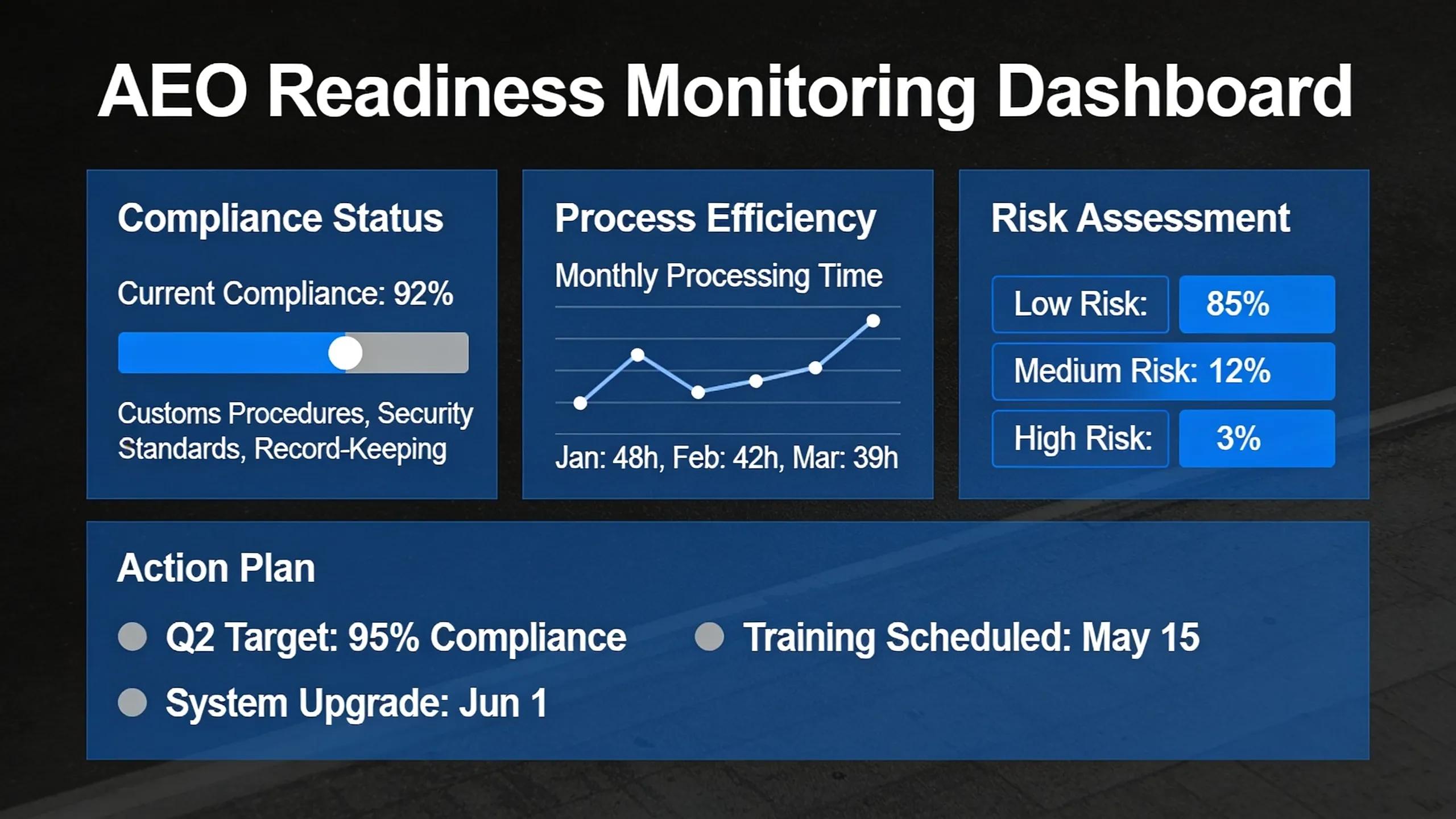
Effective auditing includes establishing benchmarks and tracking improvements over time.
Set Clear KPIs: Define measurable goals such as increased AI citation rate, improved voice search visibility, or enhanced engagement metrics.
Use Dashboards: Consolidate data from analytics and SEO tools into comprehensive dashboards for ongoing review.
Adjust Strategy: Use insights from audits and performance data to refine content and technical SEO approaches.
Audit Question
If you repeated this audit six months from now, would your page still provide the clearest, most trustworthy answer available?
Frequently Asked Questions
What is the most critical factor in AEO readiness?
Understanding and aligning content with user intent and AI algorithms, combined with proper structured data implementation, are key to AEO readiness.
How can I improve my AI citation rate?
High-quality, authoritative, and well-structured content that directly answers common user queries increases your chances of being cited in AI responses.
Are all schema types equally important?
No, for voice search, FAQPage, HowTo, and Service schemas are often the most impactful as they align well with common voice queries.
Can I audit AEO readiness without specialized tools?
Basic audits can be done manually, but specialized tools significantly increase accuracy and efficiency.
How does internal linking improve AEO?
Internal linking defines entity relationships, aiding AI in understanding content context and improving user navigation.
What should I focus on after an audit?
Prioritize fixes that align with business goals, have high impact, and are feasible to implement quickly.
Is voice search testing necessary?
Yes, testing on actual voice devices reveals how your content performs in real user scenarios.
How often should content be updated for AEO?
Monthly content reviews and quarterly refreshes ensure ongoing relevance and alignment with AI standards.
Start Your AEO Audit Today
Empower your digital presence by ensuring your pages are fully optimized for answer engines. Begin with a comprehensive audit and take strategic steps toward AEO readiness.