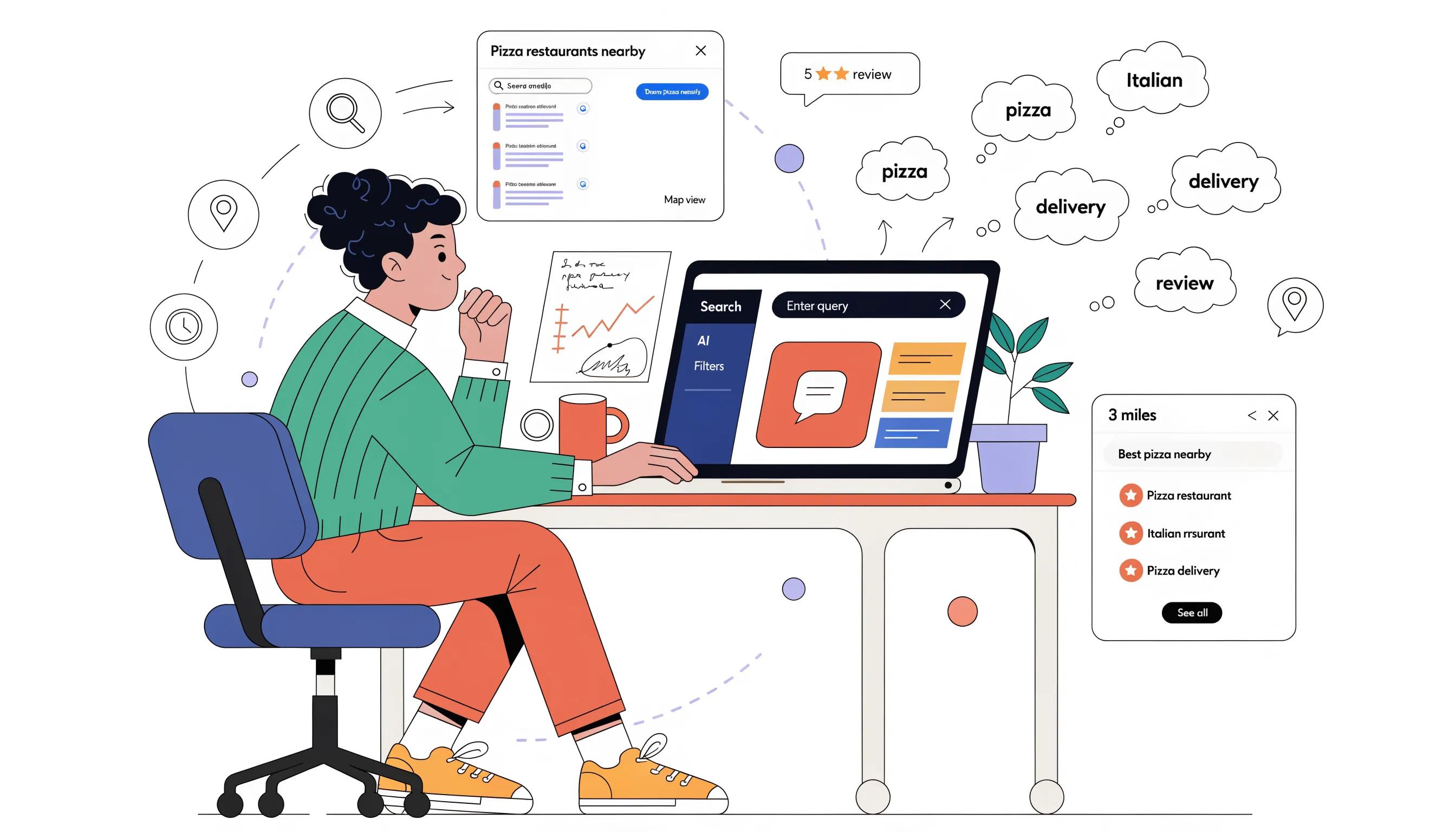
Unlocking User Intent: AI vs. Conventional Search Explained
How User Intent Differs Between AI Search and Traditional Search: Comprehensive AI Search Intent Analysis
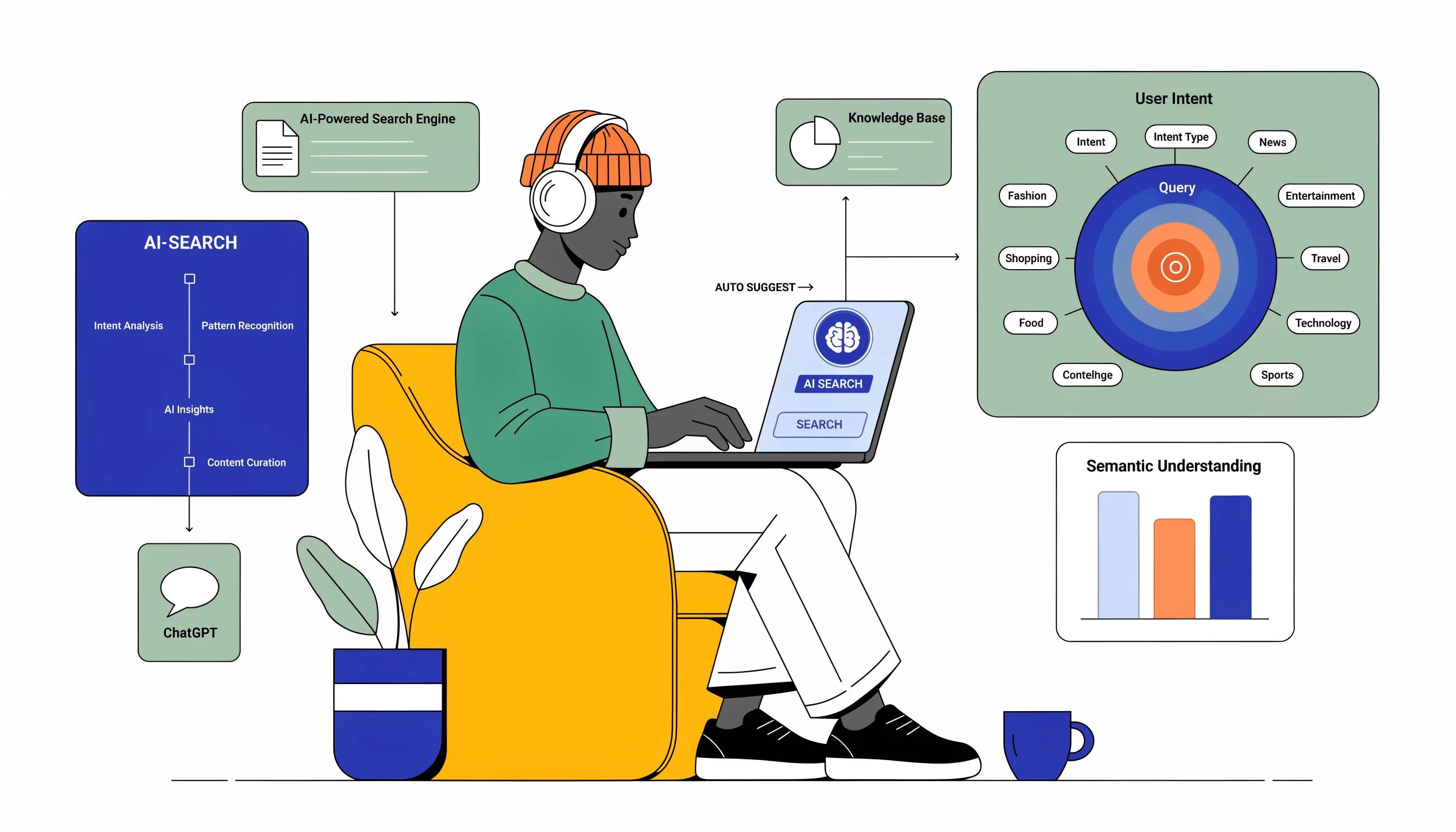
By Sean Hyde, Grow with AEO
User intent is the goal behind a search query. AI and traditional search detect that intent differently, with distinct SEO and voice search implications. This article explains those mechanisms and the practical marketing steps that follow.
Key Differentiators
Traditional search matches queries to indexed pages using keywords. AI search uses models that read context, semantics and natural-language inputs to infer intent more accurately.
- User Intent Categorization: While traditional search predominantly focuses on keyword matches, AI search interprets user queries with a broader perspective, recognizing various intent types.
- Content Structure Requirements: Traditional methods require explicit keyword placement for effective ranking, whereas AI search benefits from natural language and contextual relevance in content development.
- Semantic Relevance: AI search prioritizes semantic understanding, evaluating not just what the user types, but the underlying meaning and context that drives their search.
User Behavior
AI search has changed how people interact with search: users increasingly use conversational queries and expect personalised results. That shift requires new success metrics and tailored approaches to search results.
- Impact of Conversational Queries: Users naturally express their inquiries in a conversational manner, prompting search engines to adjust their algorithms accordingly to deliver relevant results.
- Change in Success Measurement Metrics: Success for AI search providers is measured not just by click-through rates but by user satisfaction and engagement, reshaping SEO strategies.
- Role of Personalization: Personalized search results rely on user data and past interactions, leading to more relevant answers and boosting engagement.
Marketers and SEO specialists must adapt to these behaviours to improve visibility and effectiveness. For practical guidance, explore strategies to enhance visibility.
Implications for Search Engine Optimization

Differences in intent require changes to SEO tactics. Businesses should shift techniques to match AI-driven search behaviour and ranking signals.
- Content Creation Strategies: Crafting content that resonates with user intent is imperative. Engaging and relevant content is favored by AI algorithms, leading to higher rankings and visibility.
- Need for Structured Data: Incorporating structured data improves the likelihood of being recognized by AI systems, enhancing the chances of appearing in rich snippets and other prominent search features.
- Importance of User Experience: Providing a seamless user experience is critical, particularly as AI search emphasizes engagement and satisfaction metrics. Websites should be optimized not only for keywords but for user navigation and interaction.
What Are the Fundamental Differences Between AI Search and Traditional Search User Intent?
AI search incorporates contextual signals and behavioural data into the various models used in traditional search. This produces a more nuanced view of intent and different optimisation needs—see AEO marketing strategies that leverage these differences.
- Keyword Focus in Traditional Search: Users employing traditional search methods often rely on straightforward keywords, leading to a more rigid structure of search results.
- Contextual Understanding in AI Search: AI systems evaluate user queries in depth, facilitating a more conversational and context-aware interaction, ultimately providing more accurate and relevant results.
- Direct Answers vs Link Lists: Traditional search often delivers a list of links, while AI search aims to provide direct answers, significantly enhancing user satisfaction.
How Does AI Search Interpret Semantic User Intent Differently?
AI uses natural language processing to parse sentence structure and meaning, then ranks results by contextual relevance rather than exact keyword matches.
- NLP Techniques: Utilizing NLP, AI search engines analyze phrases and patterns to discern meaning, capturing the intent behind user inquiries more accurately.
- Contextual Understanding: AI considers the context of previous interactions, user data, and conversational flow, enhancing the relevance of search outputs.
- Examples of Semantic Evaluations: AI constructs models to assess sentence structure and word relationships, ultimately leading to a richer understanding of user intent.
What Are the Characteristics of Traditional Search User Intent?
Traditional search depends on specific keywords and straightforward queries, yielding results that match phraseology more often than intent.
- Keyword Reliance: Users typically engage with search engines using specific phrases or terms, emphasizing the importance of keyword optimization within SEO practices.
- User Intent Interpretation: Traditional search mechanisms analyze user queries based on the keywords presented, often yielding results that match exact phraseology rather than intent.
- Content Structure Around Keywords: Websites must structure content explicitly around targeted keywords to enhance ranking potential, creating a rigid approach to SEO.
How Does Voice Search Influence User Intent Compared to AI and Traditional Search?

Voice search changes how users ask questions: it is more conversational and produces distinct query patterns that differ from text-based searches.
- Conversational Nature of Voice Search: Voice search encourages more natural, fluid inquiries, altering the structure of how users formulate their questions.
- Immediate and Local Intent: Many voice queries concern immediate, location-based information, prompting search engines to prioritize responses that are contextually relevant and timely.
- Task-Oriented Interactions: Users frequently employ voice search to complete particular tasks, resulting in a different set of expectations than traditional search users might have. Mastering these patterns supports effective voice search marketing.
What Are Key Voice Search Intent Patterns and Their Impact?
Voice search produces intent patterns—local emphasis, task-driven questions and concise expectations—that marketers must address explicitly.
- Local Intent Emphasis: There is a strong emphasis on local information, with users seeking quick answers about nearby services or businesses.
- Task-Oriented Queries: Many voice searches are indicative of specific tasks, requiring businesses to be well-prepared to answer succinctly and take appropriate action.
- Implications for Marketers: Understanding these patterns allows marketers to develop strategies that accurately address voice search inquiries, enhancing visibility and user engagement.
Adapting to these patterns helps companies meet changing consumer needs.
How Is Voice Search Changing Overall User Intent Dynamics?
Voice search shifts intent toward interactive, immediate answers and a closer back-and-forth between users and search systems.
- Conversational Queries vs Keyword-Focused Searching: The uptick in voice searches emphasizes a shift towards conversational inquiries, where users expect direct and immediate responses rather than navigating lists of links.
- User Expectations: Higher expectations dictate that voice search users anticipate clear and concise answers, often within a succinct timeframe.
- Shifts in Search Behavior: This transition alters marketer strategies, necessitating a content adaptation that aligns with conversational parameters and user expectations.
What Practical Marketing Strategies Can Use Intent Differences Between AI and Traditional Search?
To leverage differences in intent, update strategy to reflect conversational queries, structured data needs and engagement-driven metrics.
- Content Optimization for User Intent: Creating content that resonates with specific user intents can boost visibility and engagement, providing a solid foundation for both traditional and AI search.
- Incorporating Structured Data: Implementing structured data improves AI search comprehension, enhancing the likelihood of favorable outcomes in search results.
- Monitoring and Analysis Practices: Keeping a close eye on user interactions and trends enable marketers to optimize their approaches continuously.
How to Optimize Content for AI Search Intent Recognition?
Optimizing content for AI means clear, focused content that answers intent directly and uses context to signal relevance.
- Understanding User Intent: Developing a thorough understanding of the user’s needs during the search process enables marketers to create pertinent content.
- Using Structured Data: Applying structured data tags improves the likelihood of content being recognized properly, enhancing visibility in AI-driven search results.
- Regular Content Updates: Periodically updating content to reflect current trends and user expectations is paramount for maintaining high relevance in search rankings.
How to Address Traditional Search User Behavior in Marketing Plans?
To reach traditional searchers, apply established SEO tactics: target query types, use clear structure and include conversational phrases where appropriate.
- Categorizing User Queries: Identify different types of queries—informational, navigational, transactional—and target them appropriately in your content.
- Optimizing for Conversational Phrases: Include natural, conversational language to align with the typical search dialogue utilized by users.
- Focusing on Clarity: Content should remain clear and concise, leading to higher engagement rates and better response from search engines.
Which User Intent Classification Types Vary Most Between AI and Traditional Search?
Intent categories behave differently across AI and traditional search, altering which content formats and answers perform best.
- Variations in Informational, Navigational, Transactional Intents: Each intent type manifests differently across search platforms, with AI search providing a more nuanced understanding of user needs.
- Examples Illustrating Differences: For example, an informational query might generate content-heavy output on traditional search but lean towards concise answers in AI environments.
- Impacts on Search Results: Understanding these nuances enables marketers to tailor their content strategies more effectively, ensuring that both user needs and search engine criteria are met.
How Do Navigational, Informational, and Transactional Intents Differ Across Search Types?
These intent types serve different goals: navigational directs users to a destination, informational seeks knowledge, and transactional aims to complete a purchase or action.
- Understanding Intent Types: Navigational intents focus on directing users to specific locations online, while informational intents seek knowledge, and transactional intents involve purchasing behaviors.
- Examples of Each Intent Type: A navigational search might include queries like “Facebook login,” while informational might be “How to bake a cake,” and a transactional one could be “Buy Lion's Mane supplements.”
- Impacts on Search Results: Each intent significantly influences the type of content users encounter, dictating how marketers should strategize their outreach accordingly.
What Emerging User Intent Patterns Are Driven by AI Search Innovations?
AI-driven innovations create new intent patterns—conversational queries, zero-click answers and personalised results—that change how users expect to find information.
- Conversational Queries: As users adapt to speaking naturally, search engines respond with algorithms designed to deliver conversationally relevant information.
- Zero-Click Search Trends: The drive for efficiency increasingly favors answers appearing directly on search results pages without user clicks, optimizing speed of response.
- Personalization in Results: Innovations in AI allow for tailored search outcomes based on user history and preferences, enhancing overall search relevance.
What Recent Data and Case Studies Illustrate User Intent Differences in AI vs Traditional Search?
Recent data and case studies highlight clear intent differences between AI and traditional search approaches and their effects on engagement and conversions.
- Statistics on Search Queries: Reports indicate that over 50% of searches will be voice-based by 2024, showcasing a shift towards natural language processing.
- Case Study Examples from Businesses: Companies employing AI-driven search optimizations have reported up to a 30% increase in conversion rates as user intent is met more accurately.
- Implications for Marketers: These insights point towards the critical need for adaptive strategies that align with shifting user behavior in search environments.
What Do 2024 Statistics Reveal About AI Search Usage and Intent Complexity?
2024 statistics show rapid adoption of AI search and growing complexity in how intent is expressed and interpreted.
- Trends in User Behavior: A significant increase in user engagement is evident, as individuals expect immediate and relevant responses across diverse platforms.
- Growth Metrics for AI Search: Companies leveraging AI-driven insights have noted a substantial uptick in traffic, correlating with enhanced user experience and satisfaction.
- Comparison with Traditional Search: The contrast in engagement levels between AI and traditional approaches reveals a pressing need for marketers to adapt to AI trends.
How Have B2B SaaS and Local Businesses Benefited From AI Intent Optimization?
B2B SaaS firms and local businesses gain clear advantages by aligning content with AI-detected intent.
- B2B SaaS Case Examples: Companies have successfully increased lead conversions by utilizing contextualized content tailored to buyer intentions, characterized by a 25% increase in engagement.
- Local Business Success Stories: Local businesses optimizing their content for voice search have noted up to a 40% increase in foot traffic, attributing this to a better understanding of local user queries.
- Overall Benefits from Optimization: The comprehensive approach to aligning user intent with business offerings fosters higher engagement and more successful customer interactions.
What Semantic SEO Enhancements Improve Visibility for Differentiating AI and Traditional Search Intent?
Semantic SEO—schema markup, clear entity signals and performance monitoring—improves visibility across both AI and traditional search results.
- Using Schema Markup: Implementing schema markup on websites aids search engines in understanding content and context, thereby enhancing visibility.
- Creating Clear Entity Representations: Tailoring content towards clear entity guidelines allows better recognition of user intent by AI systems.
- Monitoring Performance Metrics: Continuous evaluation of performance metrics should inform marketing strategies, ensuring alignment with current search engine expectations.
How to Implement Schema.org Markup for User Intent and AI Search Content?
Schema.org markup helps communicate intent to search engines in a machine-readable way.
- Choosing Appropriate Schema Types: Identifying and applying the correct schema types relevant to service or content enhances the understanding of context.
- Validating Markup: Utilizing validation tools helps ensure that the schema markup is correctly formatted and functional, allowing for accurate indexing by search engines.
- Using JSON-LD Format: Employing JSON-LD format for schema implementation offers a more efficient way to structure data for AI comprehension.
Frequently Asked Questions
1. How can AI search improve user engagement compared to traditional search?
AI improves engagement by interpreting context and delivering personalised answers instead of simple keyword matches. That relevance increases satisfaction and repeat visits.
2. What role does user experience play in AI search optimization?
User experience is central: AI rewards engagement metrics like time on site and low bounce rates. Fast pages, clear navigation and relevant content retain users and improve AI search outcomes.
3. How does the use of voice search affect content strategy?
Voice search pushes content toward conversational phrasing and question formats. Optimise for natural language and long-tail queries to capture voice-driven traffic.
4. Are there specific metrics to measure the success of AI-driven SEO strategies?
Yes. Track engagement metrics—average session duration, pages per session and reduced bounce—alongside conversion rates and search visibility to judge AI SEO performance.
5. What types of content are most effective for AI search?
Clear, intent-focused content works best: concise how-to guides, FAQs and structured answers. Use schema and multimedia to help AI understand and increase engagement.
6. How can businesses adapt to the future of search with evolving user intent?
Adapt by monitoring user behaviour, updating content for conversational and personalised experiences, testing new formats and refining SEO to match AI trends.
7. What is the importance of structured data in AI search?
Structured data helps AI parse content context, increasing the chance of rich results and accurate answers. Correct markup improves visibility and drives engagement.